Sam Page
← All thinking

You can build something really impressive for your customers and they still might…

People and behaviour2 min readSam Page

You can build something really impressive for your customers and they still might reject it.

Organisations often come to us, after having spent lots of time and money building a platform, that customers just don't want to use.

The usual response, which makes sense, is to assume people don’t know it’s there.

Run a launch campaign, add a few more features, smooth out the onboarding.

Some businesses go further and make the phone number harder to find, to nudge people into the new channel.

But I think all of that treats low adoption as an awareness or usability problem. It judges the thing on what it can do, when your customers are also weighing up what it takes away.

Gartner found 64% of customers would prefer companies didn’t use AI for customer service. Their biggest worry was that it would make it harder to reach a person.

So hiding the phone number takes away the very thing they were worried about losing, and pushing harder can make adoption worse.

And the bigger the decision, the more confidence people need before they act. Research from RTB House this year found 35% of consumers want a human to approve a purchase before an AI completes it.

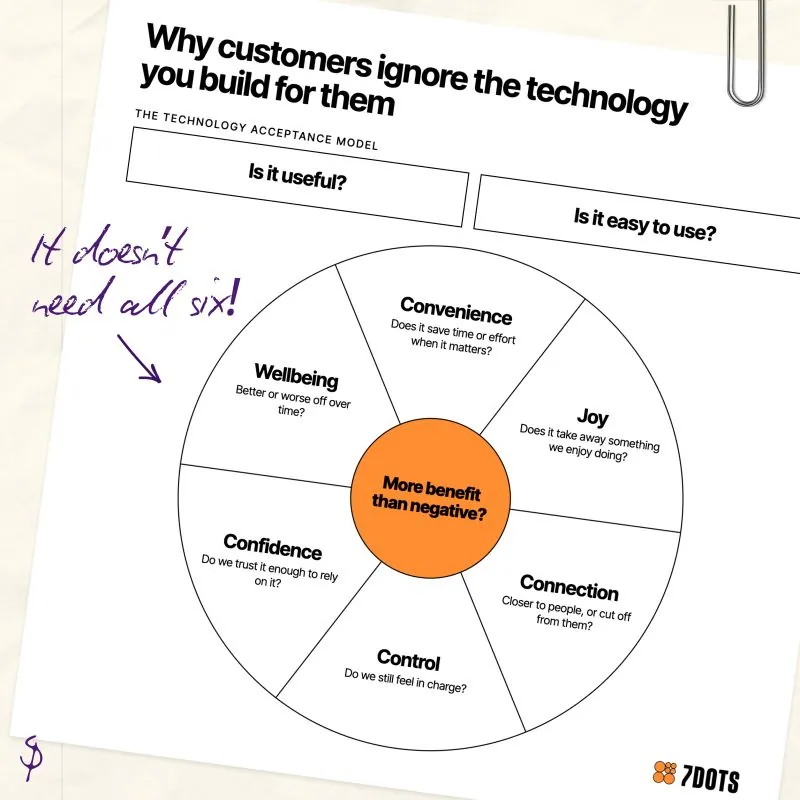
So before you build, go through it from your customers’ side:

  • Convenience. Does it save time or effort when it matters?
  • Joy. Does it take away something they enjoy doing?
  • Connection. Does it bring them closer to people, or cut them off?
  • Control. Do they still feel in charge?
  • Confidence. Do they trust it enough to rely on it?
  • Wellbeing. Does it leave them better or worse off over time?

It doesn’t need to win on all six.

Where it wins tells you what to lead with, and what it takes away tells you what to fix, or leave alone.

For me, the best use of technology is to take away the effort people resent, and keep them in charge of the parts they enjoy or need to trust.

Adoption gets decided in the design, long before the launch.

Run the test first, through your customers’ eyes.

First published on LinkedIn.

More on people and behaviour

One email, every Friday.

What happened this week, what I'm thinking about, and one takeaway for yours.

GEThttps://sam-page.com/thinking/you-can-build-something-really-impressive-for-your-customers-and-they-still-migh.mdtext/markdown; charset=utf-8

---
title: "You can build something really impressive for your customers and they still might…"
url: https://sam-page.com/thinking/you-can-build-something-really-impressive-for-your-customers-and-they-still-migh
date: 2026-10-29
author: Sam Page
type: Post or article
categories: [People and behaviour, Customer experience]
reading_time: 2 min
summary: "You can build something really impressive for your customers and they still might reject it."
first_published: https://www.linkedin.com/feed/update/urn%3Ali%3Ashare%3A7521499303887052802
---

# You can build something really impressive for your customers and they still might…

You can build something really impressive for your customers and they still might reject it.
![](https://sam-page.com/img/thinking/you-can-build-something-really-impressive-for-your-customers-and-they--li1.webp)

Organisations often come to us, after having spent lots of time and money building a platform, that customers just don't want to use.

The usual response, which makes sense, is to assume people don’t know it’s there.

Run a launch campaign, add a few more features, smooth out the onboarding.

Some businesses go further and make the phone number harder to find, to nudge people into the new channel.

But I think all of that treats low adoption as an awareness or usability problem. It judges the thing on what it can do, when your customers are also weighing up what it takes away.

Gartner found 64% of customers would prefer companies didn’t use AI for customer service. Their biggest worry was that it would make it harder to reach a person.

So hiding the phone number takes away the very thing they were worried about losing, and pushing harder can make adoption worse.

And the bigger the decision, the more confidence people need before they act. Research from RTB House this year found 35% of consumers want a human to approve a purchase before an AI completes it.

So before you build, go through it from your customers’ side:

- Convenience. Does it save time or effort when it matters?  
- Joy. Does it take away something they enjoy doing?  
- Connection. Does it bring them closer to people, or cut them off?  
- Control. Do they still feel in charge?  
- Confidence. Do they trust it enough to rely on it?  
- Wellbeing. Does it leave them better or worse off over time?

It doesn’t need to win on all six.

Where it wins tells you what to lead with, and what it takes away tells you what to fix, or leave alone.

For me, the best use of technology is to take away the effort people resent, and keep them in charge of the parts they enjoy or need to trust.

Adoption gets decided in the design, long before the launch.

Run the test first, through your customers’ eyes.